Thursday, March 31, 2016
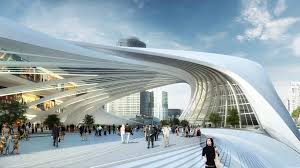
Zaha Hadid, Architect, 1950-2016
With great sadness, today I heard of the passing of architect Zaha Hadid. An Iraq-born woman who lived and worked in England, she left an indelible mark on world architecture. Her designs broke the bounds of what a building should look like. I will never forget the first time I saw one of her designs: fresh, inventive, new. She was moved to create as if no building had ever existed before, seemingly uninfluenced by precedent or tradition or shoulds or musts. Zaha Hadid's architecture was like free form jazz in a world of dainty minuets. Architecture has lost an important voice.
Thursday, March 24, 2016
Architecture on the Cover
I am pleased to report that a recent project by my office has made the cover of Colorado Homes and Lifestyles.
The April 2016 issue focuses on outdoor living. We designed this home in Cherry Hills, Colorado to wrap around and focus on a beautiful pool, spa, and patios. The article (written by Rebecca Gart, photos by Emily Minton Redfield) compares the home to a "five-star resort." In a sense, this is what we strive to accomplish with all of our residential projects. Why shouldn't our homes feel as welcoming and exciting as a vacation place? A retreat from the ordinary world into one of accommodation and comfort. The author of the piece interviewed me for the article. One quote she chose is something I stand by as my design ethos:
Thank you to Colorado Homes and Lifestyles for featuring our work.
Credits
Clients: Hud and Carol Karshmer
Interior Designer: Jill Firkins
Builder: Dick Tanner, Northbrook Consulting LLC
![]() |
| April 2016 issue. |
There should never be a conflict between aesthetics and function. Solve the function first, and then figure out the most beautiful way to express that.We work to achieve that goal in all of our work.
Thank you to Colorado Homes and Lifestyles for featuring our work.
Credits
Clients: Hud and Carol Karshmer
Interior Designer: Jill Firkins
Builder: Dick Tanner, Northbrook Consulting LLC
Monday, March 14, 2016
Great Architecture Requires Great Builders (Let's Talk About Competitive Bidding)
A question that regularly comes up with my new clients is how do I select a builder? accompanied by should we be getting competitive bids? I'm a firm believer in selecting a qualified builder right at the beginning as part of your design team. This should be done when your plans are being created so the builder can contribute his/her expertise in planning the project. This will be helpful in establishing the budget. The builder can guide wise choices in specifications, materials, and capabilities of local craftsmen. Obviously, it is impossible to obtain competitive bids at this stage because there are no completed drawings from which to bid. Of course, it's logical to wonder how selecting a builder so early will give you someone who is going to be cost competitive. Putting it bluntly, how do you know you're getting a good and fair deal?
If we are talking about custom homes (the bulk of my work) there are many ways you can find a builder that you can trust, even before you know the final cost. First, let's clarify some terms. Builder and general contractor are used interchangeably, but most builders of custom homes are more accurately described as construction managers. Few custom builders are actually in the field swinging a hammer, installing electrical conduit, or roofing the structure. They are subcontracting this work to (what should be) qualified, licensed subcontractors. The construction manager will coordinate the construction and will make a profit on fees or on a percentage of the estimated budget. (More on that in a moment.) Where the budget can be controlled is amongst the subcontractors. You want to be certain that your builder is getting competitive bids from qualified subcontractors and not just getting bids from the same people they always use because it's convenient for them. Determining that should be part of the client's due diligence. It requires checking builder references and talking to past clients. It also means that the bidding process should be transparent: all bids from subcontractors should be presented to the owner.
A client can certainly interview various builders (or construction managers) to determine who is best for them. But then choose one; don't make them fight for the lowest bid. The incentive in that scenario is to provide lowball prices using cut-rate sub contractors that may not be the best choices. In selecting a builder up front, there are three criteria you can use.
After all this due diligence, you might continue to wonder about getting competitive bids. I still think the answer is no. The bidding competition will take place anyway on the subcontractor level. The chief builder - the construction manager - is hired to get the best prices from the most qualified subs. For a more detailed explanation, Steve Jones and Bart Jones (my friends who own Merlin Contracting in Las Vegas, Nevada) have a great article on competitive bidding in their on-line newsletter. It is one of the best-reasoned discussions I have read on the subject. If you are about to build a new home or are just curious about the process, please click on this Merlin Contracting link to read more about competitive bids.
Building a new home can and should be a happy experience. Hopefully you have chosen an architect who can perform. Great architecture also requires great builders. Make your builder part of the design team as early in the process as possible.
If we are talking about custom homes (the bulk of my work) there are many ways you can find a builder that you can trust, even before you know the final cost. First, let's clarify some terms. Builder and general contractor are used interchangeably, but most builders of custom homes are more accurately described as construction managers. Few custom builders are actually in the field swinging a hammer, installing electrical conduit, or roofing the structure. They are subcontracting this work to (what should be) qualified, licensed subcontractors. The construction manager will coordinate the construction and will make a profit on fees or on a percentage of the estimated budget. (More on that in a moment.) Where the budget can be controlled is amongst the subcontractors. You want to be certain that your builder is getting competitive bids from qualified subcontractors and not just getting bids from the same people they always use because it's convenient for them. Determining that should be part of the client's due diligence. It requires checking builder references and talking to past clients. It also means that the bidding process should be transparent: all bids from subcontractors should be presented to the owner.
A client can certainly interview various builders (or construction managers) to determine who is best for them. But then choose one; don't make them fight for the lowest bid. The incentive in that scenario is to provide lowball prices using cut-rate sub contractors that may not be the best choices. In selecting a builder up front, there are three criteria you can use.
Reputation
Most people have friends who have built homes. That can be a starting point for interviewing prospective builders. You can also get names of qualified builders from your architect or interior designer. Good references are important, but you need to dig deeper. Talk to other people who have had homes built by your prospective builder. Were they satisfied? Did they have any problems? Was the builder diligent in seeking the best prices from subcontractors (as described above)? How do they handle change orders?Fee
There are many ways to set up a contract between owner and builder. Percentage of cost, fixed fee, and combinations of those two. Some builders charge penalties on change orders; that part of the contract should be clear and understandable. None of these methods are good or bad of themselves. It depends on what you are comfortable with. When comparing builders, you want to know the details of their fee basis. You want to be sure they offer a business deal that works for you. Also, keep in mind that any proposal is negotiable in the details.Rapport
Finally, ask yourself how comfortable you are with any prospective builder. Constructing a house is a long term relationship. You want a builder who is honest, trustworthy, and true. Don't be misled by superficial gregariousness. You don't need your builder to be your BFF, but you do want someone you feel good about and can have direct conversations with during the good and the bad periods of getting your project completed. If you've done your homework on reputation and fee, then your gut feelings about who you want to work with are also important.After all this due diligence, you might continue to wonder about getting competitive bids. I still think the answer is no. The bidding competition will take place anyway on the subcontractor level. The chief builder - the construction manager - is hired to get the best prices from the most qualified subs. For a more detailed explanation, Steve Jones and Bart Jones (my friends who own Merlin Contracting in Las Vegas, Nevada) have a great article on competitive bidding in their on-line newsletter. It is one of the best-reasoned discussions I have read on the subject. If you are about to build a new home or are just curious about the process, please click on this Merlin Contracting link to read more about competitive bids.
Building a new home can and should be a happy experience. Hopefully you have chosen an architect who can perform. Great architecture also requires great builders. Make your builder part of the design team as early in the process as possible.
![]() |
| Traditional home designed by Michael Knorr, built by Merlin Contracting. |
![]() |
| Contemporary home design by Michael Knorr, built by Merlin Contracting. |
![]() |
| Bart Jones & Steve Jones of Merlin Contracting. |
Friday, March 11, 2016
Dinner Over Architecture
I had a very pleasant experience last weekend. I was invited to dinner by the new owners of a home I designed very early in my career.
The original clients, Al and Linda, were enthusiastic about architecture in general and game for the adventure of building a new home. The site, in the foothills outside of Denver, was sloping and rocky. It called for a structure nestled into the slope with windows and deck facing out toward the best views.
The experience of building must have been a good one for Al and Linda; we went on to design a second home for their family a few years later on a nearby site. Their first home was sold twice. First to a couple I never met and recently to Gary and Karen. Like Al and Linda, the new owners are archiphiles. (In fact, both their son and daughter-in-law are architects.) They were eager to meet the architect for their "new" home and that is how the dinner came about. I jumped at the invitation to join them and Al. (Unfortunately, Linda was ill and unable to join us.) Approaching the house on a beautiful Colorado evening, it looked exactly as it did when built. With one big exception: the trees that Al had planted many years ago now made the house seem like a forest retreat.
To my relief, the architecture had stood the test of time. It was one of my early works, but not so early it was amateurish. What few changes Gary and Karen had made were simple improvements in keeping with the architectural theme. The original design concept was still intact and still good.
We talked about the house, architecture in general, music, Denver's restaurant scene, and family. Dinner over architecture... a very pleasasnt experience.
![]() |
| The house as construction was nearing complettion. |
![]() |
| South deck just after Al and Linda moved in. |
![]() |
| A more recent photo showing tree growth. |
Sunday, January 24, 2016
Podcast for Architects and Builders
I was interviewed recently for a new podcast aimed at architects and builders sponsored by Mountain View Windows and Doors. The podcast series is called The Art of Construction. It is intended to help architects and contractors "grow their businesses by exploring the world of construction." The podcast interviews are led by Devon Tilly and Kevin Keefe. They urge architects and builders to "consider this podcast to be your own business advisory board: sharing real life examples, navigating through the opportunities and land mines of the construction business with advice that you can implement in your business to continue making it better and more profitable."
You can listen to my interview (#38) as well as other interviews on iTunes or Sticher or directly from the Mountain View web site. To get started click here: SHOW 38: AVOID MISTAKES BY CREATING A PROCESS FOR LISTENING TO YOUR CUSTOMERS.
![]() |
| One project mentioned on the podcast. |
Tuesday, December 15, 2015
The Crazy Architecture in Dubai
When I was a kid I read as much science fiction as I could get my hands on by authors such as Robert Heinlein, Arthur C. Clark, Andre Norton, etc. At the same time, real life magazines like Popular Science, which I consumed like candy, promised a future filled with flying cars, personal robots, and fantastic architecture.
I also devoured sic-fi movies like The Day the Earth Stood Still and Forbidden Planet (the best movie ever made). It didn't help that my fourth grade teacher, Mr. Karp, predicted all sorts of inventions that would come about by the time I grew up. Specifically, he said it was all but certain a transporter machine the size of a telephone booth would whisk human beings from one place to another in the same manner a conversation traveled through phone wires. I am still waiting for this invention to materialize.
In other respects, it seems that the science fiction of yesterday is the reality of today. I marvel that we actually seem to be living in the world of tomorrow. Hand-held computers, personal robots (I have a Rumba that cleans my floors every day), and other stuff of the future is here now. Even our architecture resembles the cover of a science fiction novel from 1955. Not everywhere, but in many places. Especially in Dubai with the Burj Kalifa tower, the Burj Al Arab Jumeirah hotel, and the Palm Islands. Now an upcoming project in Dubai continues the science fiction esthetic: Aladdin City. It's a little bit crazy and a lot of fun. The total cost of the project has not been announced. It will have air-conditioned bridges with a moving floor to connect the structures. The highest of three towers is thirty-four stories.
A YouTube video about the project can be found here: Aladdin City. The project will include offices and a hotel. So, you'll have a place to stay if you want to travel to the future.
![]() |
| Magazines like Popular Science were big on modern architecture and the inventions that went with it. |
![]() |
| The covers of pulp science fiction often featured architectural extravaganzas in futuristic mode. |
![]() |
| Sci-fi movies then and now featured futuristic design. A set from Forbidden Planet, above. |
![]() |
| The three towers of Aladdin City, Dubai. |
![]() |
| Aerial view of Aladdin City. |
Sunday, December 13, 2015
To the Student in Architecture (Part Three)
Last summer I was invited to a promotional tour sponsored by Anderson Windows. Our group of about twenty architects came from different states, all specializing in residential design. During one of our social events the conversation turned to zoning codes and the increasing difficulty in getting anything done under a labyrinth of rules and regulations. This is a common subject amongst architects. All cities everywhere are making things harder instead of easier. The time and cost of implementing new rules delays projects and drives up costs. I threw in my usual complaint about how these evolving rules are my greatest frustration. “It is the one thing,” I said, “ that makes me want to leave the profession and go on to something else. I want to spend my days creating architecture, not jumping through bureaucratic hoops.” I was exaggerating the degree of my frustration, but a young architect from Houston immediately countered, “Oh, no. It’s what makes my job interesting. I love figuring out the puzzle of codes and arriving at a solution that makes a project work.” Obviously a more optimistic thinker than myself!
The Houston architect's response did make me think more broadly about the profession of architecture. For me, design was the main draw to the field and is what keeps me interested to this day. However, the student in architecture should know that there are many other aspects to a career in architecture and many ways to practice as a professional. One of the wonderful things about an architectural education is how broad-based it is. Architects are the last of the generalists. (We know a little about a lot of things, but not much about anything in particular!) An architectural education can be great preparation for many different career paths. As an architect, design is not the only way to practice. The young Houston architect made me realize there are other passions. Problem solving is more than design solutions and architects are, by general training, problem solvers. The various types of jobs in a large office should make this clear. Among the many permutations of architectural practice there are...
![]() |
| Frank Lloyd Wright surrounded by his students. |
- Specifications writers
- Presentation artists
- Client relations experts
- CAD technicians
- Community planners
- Program writers
- Project managers
![]() |
| Yale school of architecture designed by Paul Rudolph. |
The list could go on. Many credentialed architects don't specifically practice architectural design. They may even find careers outside of architectural firms in such things as law, building administration, education, construction management, community development, code writing, and industry consulting. The point is that, as generalists, architects are eminently qualified to take on a broad array of tasks that indirectly affect the design of the built environment. Taking this a step further: if a student were able to couple an architecture degree with an MBA or an engineering or law degree, then you have a commodity in extremely rare supply (and in high demand) on the job market.
![]() |
| Student exhibition from a class taught by the author at the University of Oklahoma. |
![]() |
| Student work at the University of Oklahoma by Wm. Devine. |
![]() |
| Another student project from an exhibition at the University of Oklahoma. |
To the student in architecture I must amend my initial rush to caution. I've previously implied that unless you truly have a passion for design, forget about architecture. However, there are other passions to be found in architecture that I may be immune to. So, my amended advice is to discover what architecture is, or can be, for you. See if your talents coincide with some aspect of architecture, and look at what part of this broad field might be of interest to you.
To the student in architecture: you may discover a world of architecture that goes beyond the common conceptions of what an architect ought to be. That can be exciting in itself and may nourish a career over a lifetime. Best wishes in discovering your passion!
| Drafting room and "classroom" at Wright's Taliesin West studio. |
Subscribe to:
Posts (Atom)